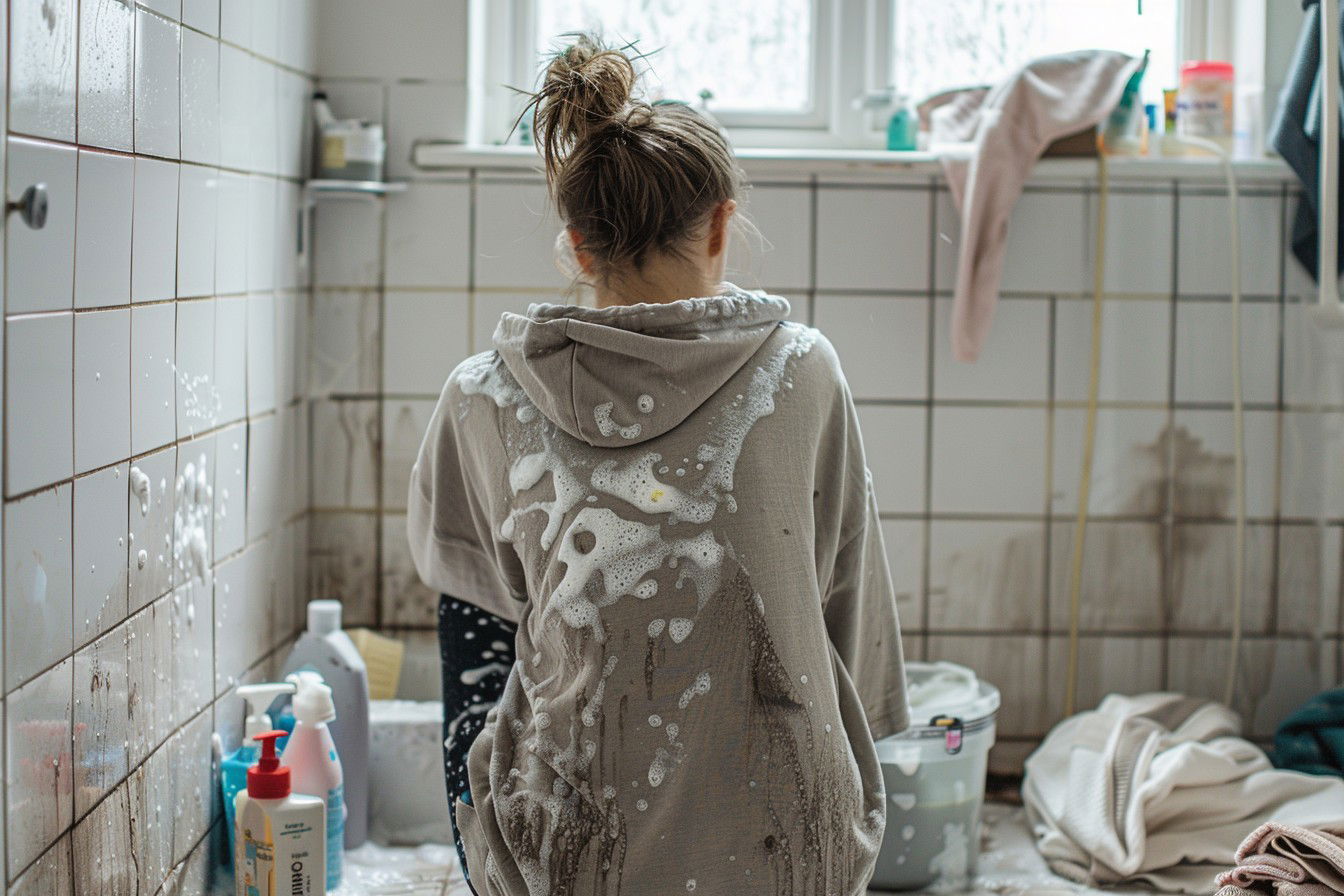
The woman on Ivydale Road had cleaned her bathroom before I arrived to clean her bathroom. Booked a full deep clean, four hours, and then spent the previous evening on her hands and knees with a cloth because she did not want me to see it as it was. She apologised for this at the door. I told her most people do it and that it makes no difference to the price, which did not appear to console her.
What she had cleaned was interesting. The basin, gleaming. The taps, buffed. The mirror, spotless. The extractor grille above the door carried a grey felt of dust about two millimetres thick, the top edge of the shower screen had a tidemark you could have dated with tree rings, and the bath mat had not been washed in long enough that it had gone stiff at the corners. She had cleaned exactly the things a visitor sees at eye level. She had not touched anything above her own head, because nobody looks up.
That instinct is the right one when you have twenty minutes. It is the wrong one for the other fifty-one weeks of the year, and I will come back to that.
What does somebody notice when they walk into your bathroom?
Not what you think. People do not conduct an audit. They stand in a doorway for a second and a half, form an impression, use the room, and leave, and the impression forms before they have consciously registered a single surface.
Smell first, and smell by some distance. A room that smells clean is filed as clean before the eye has done any work at all. Then the toilet, because that is what they came in for and it is where they will be looking. Then the basin and the mirror, which sit together as one object in the visual field. Then the floor, specifically the strip of floor inside the door and the ring around the base of the pan.
That is the whole list. The inside of the cabinet, the state of your grout, the limescale on the shower head – none of it registers in a twenty-minute visit by somebody drinking tea in your kitchen.
The doorway test
Stand in the doorway before you start and look at the room the way somebody who has never been in it will. Twenty seconds. What you are looking for is the thing that pulls the eye, and it is almost never what you have been worrying about.
Usually it is one of three things: something on the floor that should not be on the floor, a towel that has gone grey, or clutter on the basin surround. Fix the eye-pull first. Everything after that is refinement.
Where is the smell coming from?
Rarely the toilet. This surprises people, and it is the reason bathrooms that have been scrubbed hard still smell wrong.
The common sources, in the order I find them: the overflow slot in the basin, which is a warm damp tube nobody has ever cleaned and which grows a black biofilm that smells sour when the tap runs. The shower waste trap, where hair and soap turn anaerobic. The bath mat. And the floor immediately around and behind the pan, where the sealant meets the tile and where years of near misses have soaked into a joint that was never watertight to begin with.
The overflow is a thirty-second job that almost nobody does. Squirt a thin bleach gel or a thick-formula cleaner into the slot, let it run down the internal channel, leave it while you do everything else, then run the hot tap hard for twenty seconds at the end. That alone changes the character of a small bathroom more than anything else you can do in half a minute.
The mat goes in the washing machine, now, and a folded clean towel goes down in its place if the machine will not finish in time. A bath mat in a London flat with a poor extractor is damp for a large part of every day. Wash it weekly. Most households wash it when it starts to smell, which is roughly a fortnight after everybody else has noticed.
What a candle is doing, and what it isn’t
A scented candle lit in a bathroom that smells bad gives you a bathroom that smells of bad and fig. The two do not cancel. Anyone over about thirty reads a freshly lit candle in a guest bathroom as an admission, and your mother-in-law has been reading that signal since before you were born.
Open the window. Run the fan. Air moving through the room is worth more than any product on the shelf, and if the window is painted shut and the fan is the original 1990s unit that hums without shifting anything, that is the actual problem in your bathroom and no amount of scrubbing addresses it.
What order do you work in when there is no time to be thorough?
Chemistry first, then the parts you have to touch, then the parts you only have to wipe. The mistake in every panic clean I have ever heard described is that people start scrubbing immediately and give their products no dwell time at all.
Minute one: window open, fan on, bleach gel round the rim of the pan and into the basin overflow, limescale spray or cleaner on the taps and round the plughole. Walk away from all of it.
Minute two to five: clear the room. Everything that does not live on a surface goes into a laundry basket and the basket goes in a bedroom. Do not sort it. The sort is what turns a twenty-minute clean into a forty-minute clean and a domestic argument.
Minutes five to nine: the toilet, exterior first. The cistern top, the flush handle, the hinges, both faces of the seat, and the porcelain where it meets the floor. Then the brush round the bowl and flush. The outside comes first so that you are not carrying whatever came off the bowl back onto the seat.
Minutes nine to fourteen: basin, taps, mirror. Wipe the mirror with a dry microfibre in one direction after spraying, and buff the taps until they throw light, because bright metal reads as clean at a distance in a way that nothing else does.
Minutes fourteen to seventeen: the floor, and only the visible parts of it. A damp cloth on your hand around the base of the pan, then the strip inside the door. Skip under the basin pedestal.
Minutes seventeen to twenty: fresh hand towel, check the paper, run the hot tap hard to flush the overflow, take one more look from the doorway.
Skip the shower screen
I would leave it entirely. Twenty minutes is not enough to take a real limescale film off toughened glass, a half-hearted attempt leaves streaks that are more visible than the original haze, and a partly cleaned screen looks worse under a bathroom downlight than an evenly hazy one. If it needs doing, it needs a proper acid gel, a long dwell, and a squeegee, and that is a Sunday morning rather than an emergency.
The exception is a single hard water tidemark at the bottom of the glass where the shower tray meets it. That comes off with a limescale spray and thirty seconds of pressure, and it is the part of the screen that people see. The haze higher up can stay where it is, because nobody looks up.
Same reasoning applies to the ceiling, the top of the cistern lid where it overhangs, and the light pull cord, which is usually the filthiest object in the room by a wide margin and which I have never once seen a guest examine.
Why does this keep happening to you?
Here is where I talk myself out of work.
A bathroom that has had two minutes a week does not need a deep clean, and it does not need a twenty-minute panic. I have turned down jobs in Forest Hill and on Telegraph Hill because the bathroom in question needed forty minutes of the owner’s time rather than four hours of mine, and I said so, and I did not take the booking. Deep cleaning is for bathrooms that have gone past the point where ordinary effort reaches – sealant that has gone black through, limescale built into a crust on the shower arm. A room that just looks tired is not that.
The weekly version is short. Wipe the basin and taps after you brush your teeth on a Sunday. Spray the shower walls and squeegee them once. Bleach gel round the rim while the mat is in the wash, then a cloth over the floor. Nine minutes, and I have timed it in my own bathroom in SE23 rather than guessed.
What to do in the fifty-one weeks nobody is coming
Twice a year, do the things the doorway test never catches. Take the extractor cover off and wash it. Wipe the top of the door frame, the top edge of the screen, the tops of the tiles where the wall meets the ceiling, and the light fitting. Pull the bath panel off if it comes off easily and look behind it.
None of that will impress a visitor, because a visitor is looking at your taps. It matters because dust up there falls down, and a bathroom that has been cleaned only at eye level for six years develops a grey bloom on every high horizontal that eventually becomes the thing you notice from the doorway.
The woman on Ivydale Road has a cleaner now, once a fortnight, and no longer cleans before she comes. Her extractor grille is white. She told me last spring that her mother-in-law had commented on how fresh the bathroom smelled, which was the overflow, and had not mentioned the grille, because nobody looks up.