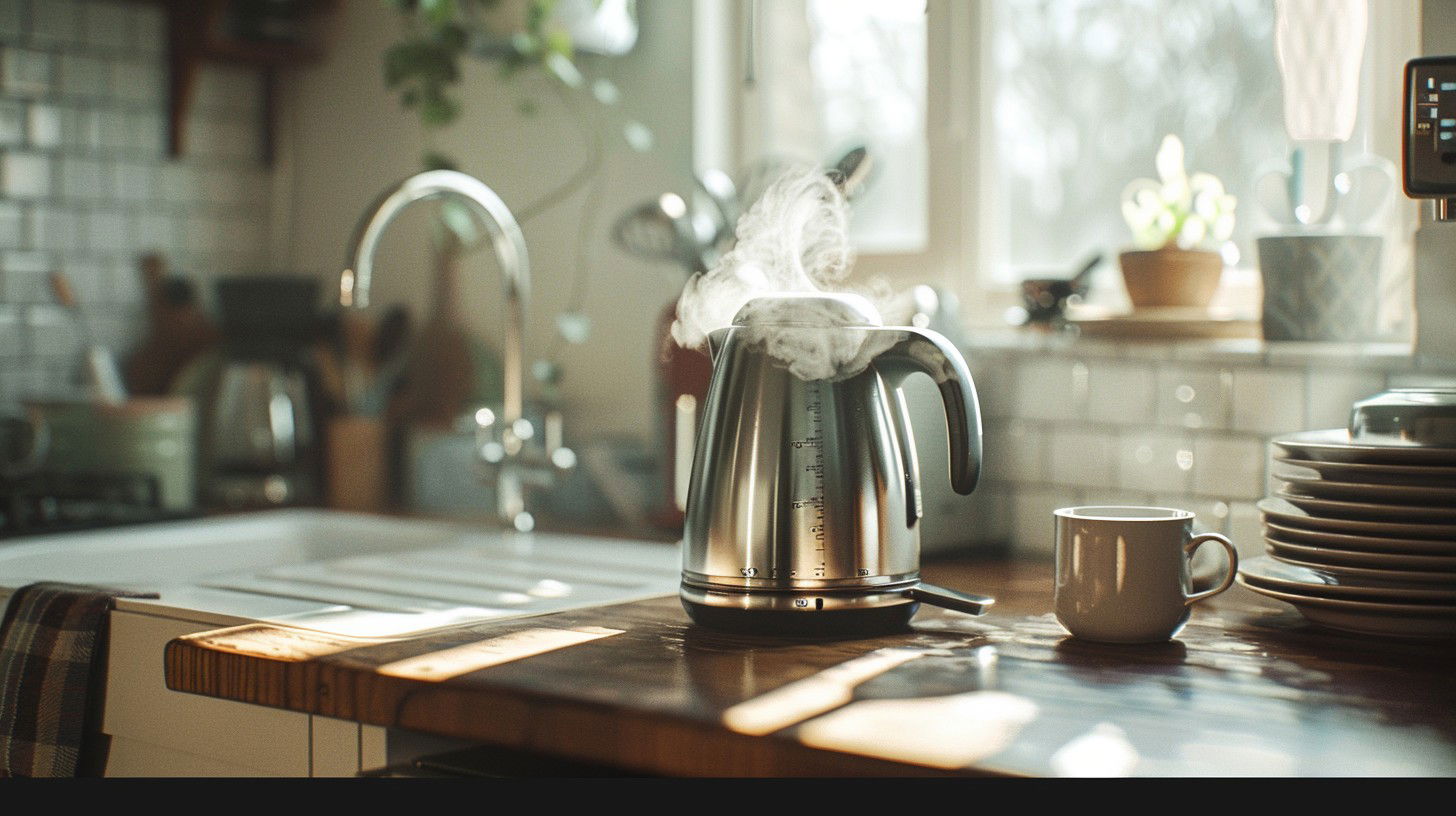
If you’ve ever peered into your kettle and wondered whether you’ve accidentally started cultivating coral, welcome to London. That pale, chalky crust coating your heating element is limescale – calcium and magnesium carbonate left behind every time hard water evaporates or boils. It’s not dangerous, it’s not a sign that you’re a bad person, and it’s not going away on its own. What it is, is one of the most common and most overlooked household maintenance problems in the capital. The good news: it’s entirely fixable, and you don’t need a chemistry degree or a plumber on speed dial to sort it.
Why London’s Water Turns Your Kettle into a Rock Quarry
London sits firmly in hard water territory. Thames Water supplies the vast majority of Greater London, and the water it delivers regularly clocks in at above 300 mg/l of calcium carbonate – classified as “very hard” by UK standards, and near the top of the national scale. If you’ve moved here from Manchester, Glasgow, or anywhere in the North West, the difference is genuinely shocking.
The reason comes down to geology. Before your water reaches the tap, it travels through chalk and limestone aquifers across the South East of England. Along the way, it picks up dissolved calcium and magnesium salts. The water itself is perfectly safe to drink – arguably better mineralised than softer alternatives – but those minerals have to go somewhere when the water is heated or evaporated. Where they go, as any Londoner knows, is straight onto your kettle element, your shower head, your taps, and everything else they touch.
This isn’t a quirk you can ignore indefinitely. In a city like London, descaling your kettle isn’t optional maintenance – it’s as routine as changing a lightbulb.
The Science Bit (We’ll Keep It Brief, Promise)
When hard water is heated repeatedly, dissolved calcium bicarbonate converts to calcium carbonate, which is insoluble and precipitates out of solution. Because heating elements are where the thermal energy concentrates, that’s precisely where the deposits form fastest. The result is an insulating layer of scale that forces your kettle to work harder to bring water to the boil – consuming more electricity and putting the element under greater thermal stress. Studies suggest even a 1.5mm layer of limescale can increase energy use by around 12%. Over months and years, that means higher bills and a shorter appliance lifespan. In London’s hard water conditions, a neglected kettle can accumulate that kind of build-up in a matter of weeks.
Your Limescale-Busting Arsenal: Methods That Actually Work
There’s no shortage of advice floating around about descaling kettles – some of it genuinely useful, some of it the cleaning equivalent of old folklore. The reality is that different levels of build-up call for different approaches. Here’s what actually works, ranked from gentle maintenance to full professional intervention.
The White Vinegar Method: Old Faithful
White vinegar is the classic descaling solution, and it earns its reputation for light-to-moderate build-up. The acetic acid dissolves calcium carbonate effectively, it’s food-safe, and you almost certainly have some under the sink already.
Method: Fill the kettle halfway with a 1:1 solution of white vinegar and cold water. Bring it to the boil, then switch it off and leave it to soak for at least 30 minutes – up to an hour for moderate scale. Empty the kettle, rinse it thoroughly, then boil two full cycles of fresh water to flush any residual vinegar taste and smell.
A word on the smell: it’s real. Open a window. Your kitchen will briefly resemble a chip shop, which some people find oddly comforting and others do not. The aroma dissipates quickly, and the double-rinse boil is non-negotiable if you enjoy your tea tasting like tea rather than a salad dressing.
For Londoners who stay on top of their kettle maintenance, a monthly vinegar treatment before serious limescale establishes itself is a perfectly solid strategy.
Citric Acid: The Professional’s Secret Weapon
If white vinegar is the reliable family hatchback of descaling, citric acid is the upgraded model. It’s stronger, completely odourless, food-safe, and available in bulk from any online retailer for a few pounds per kilogram. For professional cleaners working through end-of-tenancy jobs, Airbnb turnarounds, or deep cleans across London properties, this is the default choice.
Method: Dissolve 20-25g of citric acid powder (roughly one heaped tablespoon) in a full kettle of cold water. Boil, then leave to soak for 30-60 minutes. For heavily scaled elements – the kind that look like they’ve been dipped in concrete – you may want to repeat the process. Empty, rinse well, and do a single boil of fresh water before use.
Citric acid handles heavy build-up that vinegar simply bounces off, and without the pungent aftermath. If you take one thing from this entire article, let it be this: buy a bag of citric acid. It costs almost nothing and it works brilliantly.
Commercial Descalers: When You Mean Business
Proprietary descaling products – Oust, Kilrock, and similar brands – have their place, particularly for stainless steel elements or when you’re working to a tight turnaround and want a product with a clearly stated contact time and guaranteed food-safe formulation.
Follow the manufacturer’s instructions precisely – quantities and soak times vary between products. One firm rule: never mix commercial descalers with vinegar, citric acid, or any other cleaning agent. They’re formulated to work alone, and combining them achieves nothing useful while creating unnecessary chemical unpredictability. Check compatibility with your specific kettle model, particularly if it has a filter or internal coating, before you pour anything in.
How Often Should You Descale in London? A Realistic Schedule
Vague advice like “descale regularly” helps no one. Here’s something more concrete for London conditions.
For households in Central, East, and South London – where hardness levels are consistently highest – descaling every 4-6 weeks is a realistic target. North and West London postcodes can often stretch to 6-8 weeks, depending on local supply. If you use your kettle heavily throughout the day, err towards the shorter interval.
Not sure where your kettle currently sits? Here’s a quick visual guide:
- Light build-up – A faint white film on the element, easily removed with a single vinegar or citric acid treatment.
- Moderate build-up – Visible white crust covering most of the element, possibly with flakes detaching into boiled water. Citric acid, one to two rounds.
- Heavy build-up – The element is visibly encrusted, water takes noticeably longer to boil, or you can hear the kettle straining. Repeat citric acid treatments, or a commercial descaler.
Prevention: Playing the Long Game Against Limescale
The most effective descaling strategy is the one you have to do less often. A few simple habits make a genuine difference.
Empty the kettle after each use rather than leaving water sitting in it – standing water continues to deposit minerals as it cools, even without boiling. Give the inside a quick rinse when you empty it. It takes five seconds and meaningfully slows accumulation.
For households serious about tackling hard water at the source, a quality jug filter (Brita and their equivalents) reduces mineral content before the water ever hits the element. An in-line filter tap is a more permanent and more effective solution, though it represents a larger upfront investment. Both options improve the taste of drinking water and hot drinks alongside the descaling benefits – a genuine quality-of-life upgrade in London’s hard water conditions.
Are Filtered Water Kettles Worth It?
Kettles with built-in filter cartridges occupy an interesting middle ground. They do reduce scale to a degree – typically by filtering out some of the calcium before it reaches the element – and they noticeably improve the taste of the water, which matters if you’re particular about your tea. (And if you’re British, you almost certainly are.)
The honest verdict: they help at the margins and they’re a pleasant upgrade for tea enthusiasts, but in London’s hard water conditions they don’t eliminate the need to descale. The cartridges need regular replacement, which adds ongoing cost. Worth it if taste is a priority for you – optional if you’re purely focused on appliance maintenance.
When Limescale Is the Least of Your Problems: Knowing When to Call a Professional
A scaled kettle is usually a DIY fix. But sometimes it’s a symptom of something bigger.
If you’re dealing with heavy limescale across multiple appliances simultaneously – the kettle, the shower head, the taps, the dishwasher – that’s a sign the whole property needs a systematic descaling and deep clean rather than a series of individual spot treatments. The same applies to end-of-tenancy situations, commercial kitchens, and short-let properties that have been through a run of tenants without proper maintenance intervals.
London’s hard water doesn’t discriminate: a Mayfair townhouse and a Stratford flat accumulate scale at the same rate. When the build-up is widespread enough that working through it room by room stops being practical, that’s the point where a professional deep-clean service earns its fee many times over.
Limescale is one of those problems that’s always more manageable than it looks – as long as you don’t leave it so long that it starts looking geological. Now that you know exactly what you’re dealing with and exactly how to tackle it, that shouldn’t be a problem.